
The production growth of eight key infrastructure sectors slowed to a six-month low of 7.8 per cent in November due to a decline in the output of crude oil and cement sectors. The growth rate in the production of coal, fertiliser, steel, and electricity also decreased during November this year. According to the data released by the government on Friday, the growth during the month under review, however, is higher than the 5.7 per cent recorded a year ago.

If growth reverts to the pre-Covid level, a lot of people may have to temper their rosy optimism, points out Debashis Basu.

Infra segment, refinery product impacted the most, even as contraction narrows in latest month.

Institutional investments in Indian real estate have seen a strong start to 2025, with inflows reaching $ 1.3 billion in the first quarter - a 31 per cent year-on-year (YoY) increase. This growth was primarily driven by domestic investments, which accounted for 60 per cent of the total inflows during the quarter. With $ 0.8 billion inflows, domestic investments saw a 75 per cent annual rise and were largely focused on industrial & warehousing and office segments.

Crude oil, fertiliser and cement recorded negative growth

Entry level engineers for these roles can be paid between Rs 4 lakh to Rs 8 lakh annually, which can go beyond Rs 30 lakhs for people with more than eight years of experience.

According to the commerce and industry ministry data, during April-February 2018-19, the eight sectors recorded a flat growth rate of 4.3 per cent over the same period previous fiscal.

Coal, natural gas, refinery products and cement grew by 16 per cent, 7 .4 per cent, 2.7 per cent, and 16 .6 per cent in April this year, respectively.

The core industries that also include coal, electricity, cement, petroleum refinery products and finished steel, and carry 37.9 per cent weight in the Index of Industrial Production, had grown by 5.8 per cent in May last year.

The growth was primarily driven by domestic investments, which accounted for 60 per cent of the total inflows during the first quarter of the financial year.

With natural gas and cement showing decline in production, the growth of eight core infrastructure industries slowed down to 5.3 per cent in May against 7.4 per cent a year ago.

IIP is expected to post a subdued volume growth in February 2017
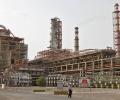
The growth rate of eight infrastructure sectors of coal, crude oil, natural gas, refinery products, fertilisers, steel, cement and electricity was 5.7 per cent in January 2016.
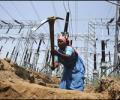
The key infrastructure sectors had grown 5.6 per cent in the same month last year.

Sharp dip in output of natural gas and fertilisers led to the decline.

Growth was primarily pushed by a jump in steel and electricity generation, apart from a sustained rise in natural gas output.

The growth in May 2015 was driven by healthy output.

Slow growth in the key sectors would have implications on the IIP number as these segments account for about 41 per cent of the total factory output.

Natural gas output rose by 6.4 per cent in June.

Larsen & Toubro (L&T) chairman S N Subrahmanyan sparked an online outrage with his comments advocating a 90-hour work week and suggesting that employees should even give up Sundays.

Reliance has filed patents not only in India but also in the US, Canada, Europe, Estonia, South Korea, and South America. The patents include narrowband Internet of Things, AI large language models, AI DeepLearning, Big Data, devices, and quantum AI in 6G.

The output of eight core industries increased 4.2 per cent in April, boosted by higher electricity, fertiliser and cement production.

The growth in eight infrastructure industries slowed to 2.3 per cent in May mainly due to contraction in crude oil, natural gas, coal and fertilizer output.

'The choice is clear: We either embrace this transformation and cement our global leadership, or hesitate, lose ground, and fade into irrelevance.'

The mismatch between PMI and core sector could also be due to the fact that while core sector is calculated year-on-year, PMI is calculated month-on-month.

'Our business continues to roll out its strategy, the role of this GDTC continues to grow.'
Eight infrastructure industries have posted a growth rate of 8 per cent for September on account of good performance by crude oil, steel and electricity sectors.

Since its October high last year, the stock of innerwear major Page Industries has been on a downtrend, shedding a little over 30 per cent of its market value. Higher competitive intensity, muted volumes, pressure on margins, and rich valuations have led to downgrades for the stock. The October-December quarter (third quarter, or Q3) performance was lower than the Street's expectations - both on volumes/sales and margins.

The growth of eight key infrastructure sectors slowed down to a 4-month low of 8.1 per cent in September 2023 against 8.3 per cent a year ago, according to the official data released on Tuesday. The growth rate in the output of refinery products, fertiliser, cement and electricity during the month under review has decelerated, while it was negative in the case of crude oil. The previous low was in May, when the growth rate of these sectors stood at 5.2 per cent.

The growth of eight key infrastructure sectors rose to a 14-month high of 12.1 per cent in August 2023 against 4.2 per cent a year ago, mainly due to expansion in production of coal, crude oil, and natural gas, according to the official data released on Friday. The expansion in August is the highest since June 2022, when it was 13.2 per cent. The production of refinery products, steel, cement and electricity also grew in August, the data showed.

New projects fell 6.3 per cent in the December quarter compared with the September quarter. The value of new projects in the just-concluded quarter was Rs 2.1 trillion, according to the data from Centre for Monitoring Indian Economy (CMIE), which was lower than the Rs 2.2 trillion seen in the September quarter. It is, however, higher than Rs 1.5 trillion recorded for the quarter ended December 2020, the first year of the Covid-19 pandemic. This data ties in with the November data for core sector growth, an index of eight core industries, which grew at its slowest pace since early 2021.

Production of eight infrastructure sectors expanded at a four-month high of 7.8 per cent in January 2023 on better show by coal, fertiliser, steel and electricity segments, according to official data released on Tuesday.

'In the audience's mind there is no urgency to go see a film in the theatre.' 'If you pay for social media buzz it does not convert into bums on seats.'

Growth of eight key infrastructure sectors rose to 8 per cent in July 2023 compared to 4.8 per cent in the same month last year on expansion in production of coal, crude oil, and natural gas, according to the official data released on Thursday. Production of steel, cement and electricity also grew in July, the data showed.

Fresh order wins for capital goods and industrial companies may have seen a major slump due to Lok Sabha polls in the first quarter of the current financial year (Q1FY25). At the same time, revenue and profit growth trajectory is expected to have stayed the course, according to brokerage firms. Elara Capital, Motilal Oswal, and InCred Equities expect this sector universe to report a 12- 21 per cent growth in revenue, 21 -36 per cent growth in Ebitda and 24-38 per cent growth in profit on a year-on-year (Y-oY) basis.

The output of eight core sectors grew by 16.8 per cent in May, mainly due to a low base effect and uptick in production of natural gas, refinery products, steel, cement and electricity, official data released on Wednesday showed. The eight infrastructure sectors of coal, crude oil, natural gas, refinery products, fertilisers, steel, cement and electricity had contracted by 21.4 per cent in May 2020 due to the lockdown restrictions imposed to control the spread of the COVID-19 infections. In March this year, these key sectors had recorded a growth of 11.4 per cent, and 60.9 per cent in April.

Top gainers in the Sensex pack included IndusInd Bank, Tata Steel, Vedanta, Tech Mahindra, ONGC, Axis Bank and ITC, rising up to 5.18 per cent.

Isha Ambani means business. Not only when she is doing business - she leads Reliance Retail - but also when she is not. The latter was unmistakable on Wednesday, during her eight-minute 49-second video address on the occasion of "Girls in Information and Communications Technology (ICT) Day India 2024".
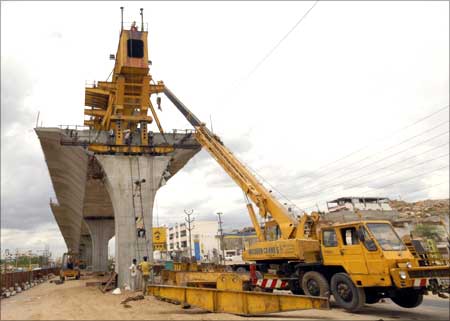
The growth rate was much higher a year ago at 8.7%.

During the six-month period (April-September 2019), the Indian economy grew 4.8 per cent as against 7.5 per cent in the same period a year ago.
 © 2026 Rediff.com - Advertise with us - Disclaimer - Privacy Policy - Sitemap - Feedback - About us - Terms of use - Grievances